

How to Meet UDI Requirements Through Precise Laser Processing
- UDI basics – It’s important to understand the two-part structure of unique device identifiers (device identifier and the production identifier) as well as the specific requirement for direct part marking (DPM) on reusable and implantable devices.
- Corrosion management – Laser marking alters stainless-steel surfaces and passivation plays a critical role in preventing rust and maintaining biocompatibility.
- Technology selection – Picosecond lasers often outperform nanosecond fiber lasers in the creation of corrosion-resistant, matte black marks that survive repeated sterilization.
Medical device manufacturers must meet both the USA’s FDA guidelines as well as the EU’s MDR mandates for unique device identification, or UDI. This identification system features a set of unique, serialized numbers that provide permanent traceability ideal for each stage of a product’s journey.
This traceability allows for the proper tracking of medical items from the factory all the way through delivery to a patient, ensuring that correct and high-quality products are being supplied. Items with UDI codes must also:
- Be presented in plain text and use machine-readable (AIDC) formats
- Undergo direct part marking (DPM) when the items are implants or reusable and require sterilization
- Be applied with proper laser marking techniques to avoid issues with fatigue life and corrosion resistance
Ultimately, having correctly applied UDI codes via laser marking helps medical companies comply with government regulations, prevent counterfeiting, speed up any necessary product recalls, and ensure patient safety.
What are the Challenge of Marking Stainless Steel?
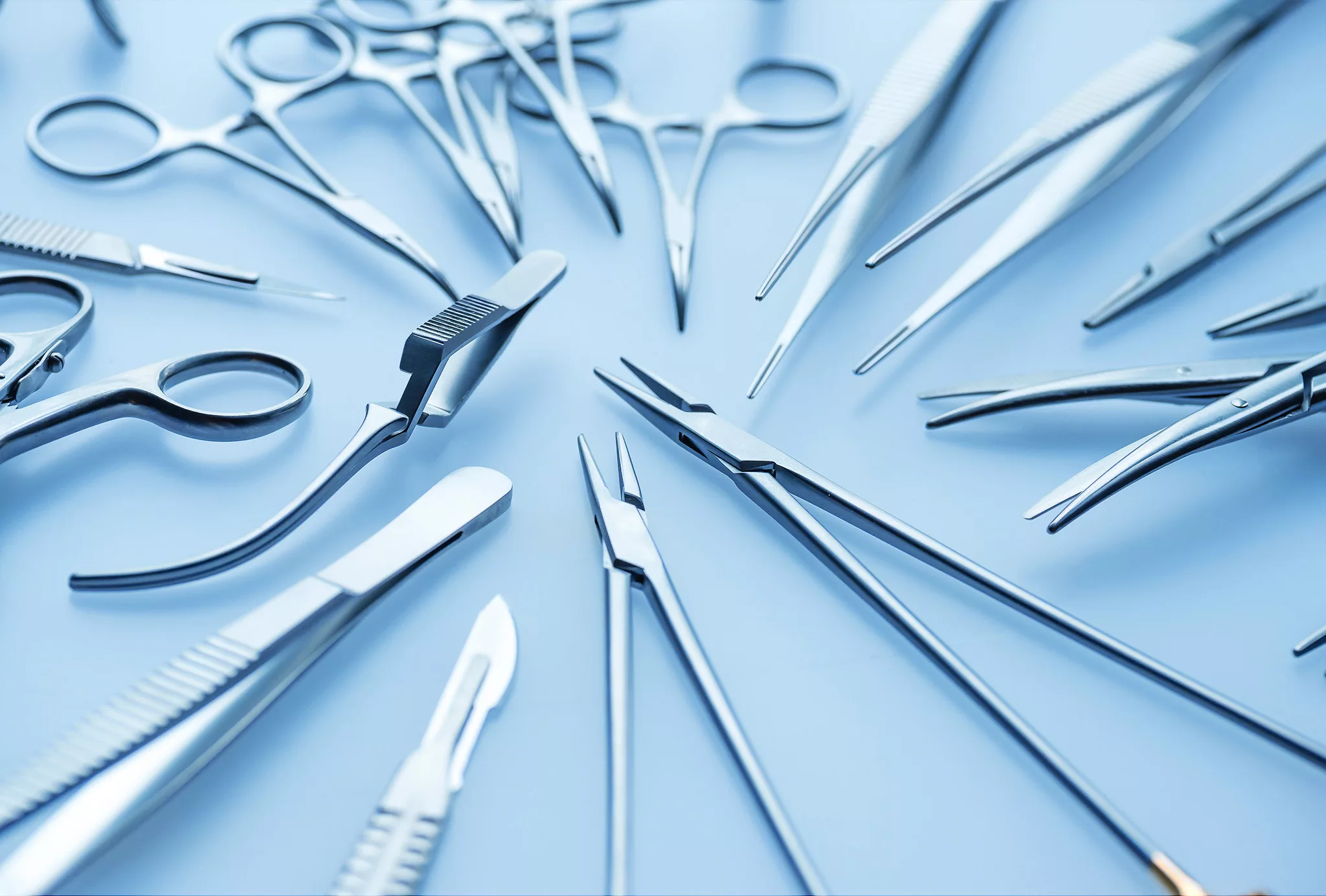
Medical equipment, particularly tools for surgery, is often crafted from stainless steel due to the material’s strength and durability. Laser marking and engraving systems are adept at marking a range of metals, including stainless steel.
Stainless steel features a chromium, which is what helps the material ward off corrosion, particularly vital within the medical space. When laser marking heats up a metal product’s surface, the surface’s composition can be affected, resulting in a heat-affected zone that is susceptible to rust. To ensure that a mark is permanent and up to UDI code standards, the surface must be processed without disturbing the corrosion-resistant material.
Nanosecond vs. Picosecond Lasers
The Nanosecondlaser
Laser marking isn’t just limited to producing obvious marks that are visible to the naked eye, however. Operators working in Nanosecond lasers create dark or black marks on a product via a thermal process. These marks are permanent and reliable, but they may be accompanied by a shiny, reflective sheen that can create some scanning issues in certain circumstances.
Additionally, since they operate through a thermal process, nanosecond lasers are more prone to causing micro-cracking or the oxidation of layers during autoclaving or salt spray tests. To avoid any damage to medical products, careful parameter controls must be implemented.
The Picosecondlaser
Picosecond lasers, on the other hand, use an athermal or “cold” marking process, due to the limited heat generated at the marked part’s surface (the result of ultrashort pulse durations).
These lasers restructure the surface of the object, creating matte black markings that trap light and provide a high contrast to the eye. Picosecond lasers are often seen as the superior choice, especially in light of their marks’ corrosion-resistant and autoclaving properties.
| Nanosecond Laser | Picosecond Laser | |
|---|---|---|
| Marking process | Thermal | Athermal / “cold” |
| Mark appearance | Dark or black; may carry a shiny, reflective sheen | Matte black; traps light for high contrast |
| Sterilization risk | More prone to micro-cracking or oxidation of layers during autoclaving or salt spray tests | Corrosion-resistant with autoclaving properties |
| Watch-outs | Careful parameter controls must be implemented | Often seen as the superior choice |
Plastics and Functional Additives
Other medical products, like syringes, inhalers, tubing, and more, also need to meet UDI requirements, and thankfully laser marking and engraving processes are ideal for marking on plastics as well as metals.
In some circumstances, lasers do require laser marking additives to be incorporated into the marking process for plastic marking.
- These additives help plastics absorb laser energy, facilitating light marks on dark backgrounds and dark marks on light backgrounds without the use of solvents or inks
- Any additives used must be non-migratory and biocompatible, being tested to ISO 10993 and USP Class VI standards
- Additives must also be able to survive sterilization cycles without resulting in faded marks
Verification vs. Reading
Since UDI codes need to be scanned, the integrity of their markings is of paramount importance. A code needs to be both readable and compliant, ensuring that it can be verified at every stage of its journey.
- Verification involves a technical grading process (with grades ranging from A to F), that relates to marking contrast, cell position, and geometry
- Since manufacturers do not control the scanners that a hospital or other facilities use, the highest possible grades are needed to ensure readability long term
- Codes that are unreadable can result in parts being thrown out or recalled, creating supply issues, added costs, and downtime
FAQs on UDI Compliance and Laser Marking
What is the difference between a UDI-DI and a UDI-PI?
The UDI-DI is the static part of the UDI code, while the UDI-PI is the variable portion.
| UDI-DI (Device Identifier) | UDI-PI (Production Identifier) |
|---|---|
| Static portion of the code | Variable portion of the code |
| Identifies the labeler and the specific model that has been produced. | Contains data like lot numbers, serial numbers, and expiration dates. |
Does laser marking affect the biocompatibility of stainless-steel implants?
It can. Since laser marking creates a heat-affected zone that degrades the passive layer, corrosion could take place unless proper passivation techniques are used alongside validation testing.
Can CO2 lasers be used for direct part marking on metal medical devices?
No, CO2 lasers are generally not recommended for marking metal without the use of additional inks (which could also create biocompatibility concerns). These laser systems are typically better suited for engraving plastics or packaging materials.
Contact ACSYS for Laser Systems to Meet UDI Requirements
Don’t fall victim to compliance issues, fines, and poor-quality parts. Effectively mark your essential medial products with precise laser systems from ACSYS. We have extensive experience working with the medical field and can help you find the right equipment for your needs.